
Quick Quote

Enquiry Info
Personal Info
All fields are required.

SaaS Localisation Europe: Localising a SaaS UI and Help Centre: A Practical Playbook for French, German, Spanish, Italian, and Dutch

If users cannot read your product, they will not trust it. That simple truth drives growth and international expansion for SaaS teams in Europe. When your UI and help centre speak French, German, Spanish, Italian, and Dutch with clear tone and local formats, effective localisation builds trust, sign-ups feel safe, onboarding is smooth, and support tickets fall. Strong localisation also helps you meet EU user expectations and reduces support load by boosting self-serve help.

This guide outlines a practical localisation strategy, including workflow, language tips, help centre best practice, QA, and measurement. You will learn what to localise first, how to avoid rework, and where business translation and interpretation services fit. London Translations is a trusted partner for complex projects and live interpreting across product, marketing, and support.

Why localising your SaaS UI and help centre for France, Germany, Spain, Italy, and the Netherlands pays off

Localisation is not only about words; it is about enhancing user experience (UX). When users see their language, their number formats, and familiar tone, they act faster and ask fewer questions. That drives activation, lowers ticket volume, raises NPS, and protects renewals. Effective SaaS localisation delivers these benefits by tailoring content to cultural nuances, boosting efficiency across your operations.

  • Familiar formats reduce friction. Show dates, times, numbers, and currencies as users expect in each market. A German invoice with a decimal comma, proper currency formats, and DD.MM.YYYY date feels normal and safe.
  • Local help content cuts confusion. When users search your knowledge base in their own words, they find answers faster. Search success goes up, and tickets go down.
  • Privacy and consent need careful localisation. EU users expect clear wording on cookies, consent, and data processing. Clumsy language causes drop-offs and complaints.
  • Business translation and interpretation services matter across the journey. Product copy, help articles, sales demos, onboarding webinars, and research interviews all rely on accurate messages and consistent terms.

Quick wins in localisation usually come from core UI strings and top help articles. Start with buttons, menus, onboarding flows, error messages, and system emails. In the help centre, localise the top 20 articles by traffic and tickets. You can expand from there, with localisation streamlining future updates for greater efficiency.

For larger product scopes or multi-team alignment, explore our SaaS localisation services to plan an efficient rollout.

SaaS Localisation Europe

What to localise first for fast wins

Prioritise the UI (User Interface) elements your users touch every day:

  • Navigation labels and menu items
  • Buttons, CTAs, and tooltips
  • Error and empty-state messages
  • Onboarding screens and checklists
  • System messages: password reset, 2FA prompts, billing notices
  • Transactional and onboarding emails

In your help centre, start with:

  • The top 20 articles by page views and ticket volume
  • Core setup, billing, and account management guides
  • Feature adoption articles that teach key workflows

Match visuals to the language. Localise screenshots, diagram labels, and alt text. A Spanish article with English screenshots confuses users, so keep UI and images in sync.

Compliance and privacy basics for EU users

To ensure regulatory compliance, GDPR-related texts must be clear and correct in each language. Translate cookie consent, data processing notices, privacy policy links, and legal footers. Localise consent buttons and cookie categories so users understand their choices. Run a legal review after translation, and adapt payment methods to local expectations for seamless transactions.

Common formatting needs:

  • Dates: day first is common, for example DD/MM/YYYY or DD.MM.YYYY
  • Numbers: decimal comma in many markets, dot as thousands separator
  • Time: 24-hour time improves clarity in most EU markets

How business translation and interpretation services support product and sales

Expert linguists support product localisation to keep product copy, sales decks, and help articles aligned. They maintain tone and terminology across touchpoints. Live interpreting supports sales calls, onboarding workshops, and user research interviews, so teams gather accurate insights and close deals without confusion.

London Translations can provide a single team across product, marketing, and support. Terms stay consistent, users feel confident, and teams move faster with fewer rewrites. For software-heavy projects, our software localisation solutions keep your UI, docs, and help content aligned.

Build a localisation-ready SaaS workflow that ships on time

Localisation slips when the workflow is vague. A clear flow helps teams ship high-quality updates in every sprint.

  • Prepare for i18n first to avoid rework later.
  • Set style guides and a term base for tone and key terms.
  • Write source content that is easy to translate.
  • Use tools and QA loops to catch errors early.
  • Design for text expansion and readability across devices.

Internationalisation basics engineers should ship first

  • Externalise all strings in resource files.
  • Use stable, descriptive keys.
  • Support UTF-8 and right-to-left readiness, even if not needed yet.
  • Handle plural forms properly with locale-aware rules.
  • Avoid hard-coded dates, times, and currencies. Use locale libraries.
  • Keep placeholders clear and protected, for example {count}, {name}.
  • Do not concatenate strings. Keep variables separate to preserve grammar.

Style guides and term bases that keep brand voice consistent

Define tone, formality, and glossary entries per language. This guides translators and speeds reviews, while ensuring brand consistency across markets.

  • Formality: vous or tu in French, Sie or du in German, usted or tú in Spanish, Lei or tu in Italian, u or je in Dutch.
  • Keep product and feature names consistent. Decide what stays in English and what gets localised.
  • Set preferred verbs for CTAs, for example “Start trial” vs “Begin trial”.
  • Use inclusive language. Avoid gendered terms when not needed.
  • Agree error tone: direct, polite, solution-first.

Source text hygiene that speeds up translation

  • Write short sentences in active voice.
  • Avoid idioms and jokes that do not travel.
  • Put one idea per string. Avoid multi-sentence blocks where possible.
  • Add context notes and screenshots for tricky UI.
  • Mark variables clearly, for example {count}, and explain what they hold.
  • Keep punctuation and spacing consistent so translators can match local rules.

Translation workflow and quality checks that scale

Use a lean, repeatable flow to support effective localisation:

  1. Prepare strings with context.
  2. Translate and edit with terminology and translation memory in a translation management system (TMS).
  3. Run automated QA for missing variables, double spaces, and length checks, even when incorporating machine translation (MT) for initial drafts.
  4. Review in context in a staging build.
  5. Sign off with a checklist before release.

Keep a feedback loop for continuous localisation. Feed support tickets and analytics back into the glossary and style guide. Over time, this removes repeat issues and speeds up delivery, enhancing overall localisation quality. For high-stakes content, our Professional business translation services add expert editors to protect tone and accuracy, ensuring polished localisation outcomes.

Design for text expansion, layout, and accessibility

  • Use responsive UI elements that wrap text and allow resizing.
  • Avoid truncation in mobile views and tight tab labels.
  • Plan for text expansion, especially for long German compounds and longer French phrases.
  • Respect French spacing before ; : ! ?
  • Meet WCAG standards. Keep colour contrast strong and fonts readable.
  • Localise aria-labels, titles, and form hints.
  • Keep line length comfortable across all five languages.

Language-specific tips for French, German, Spanish, Italian, and Dutch

These quick rules for local language localization help writers and reviewers ship clean, localised UI copy that accounts for cultural differences in formality levels, such as vous/tu in French or Sie/du in German.

French (fr-FR): formality, spacing, and decimal comma

  • Prefer vous in business UI. Use tu only for very casual brands.
  • Add a thin space before ; : ! ?
  • Use a decimal comma and a space as thousands separator.
  • Dates often DD/MM/YYYY, time usually 24-hour.
  • Translate common tech terms, for example logiciel for software.
  • Watch false friends like librairie vs bibliothèque.
  • Keep button labels short and polite.

German (de-DE): long compounds and formal Sie

  • Use Sie in formal UI. Use du only for brands with a clear casual voice.
  • Capitalise all nouns.
  • Expect longer words. Give buttons and tabs more space.
  • Decimal comma and dot as thousands separator. Dates often DD.MM.YYYY. 24-hour time.
  • Avoid splitting verbs across lines.
  • Write direct, polite, solution-focused error messages.

Spanish (es-ES): accents, inverted punctuation, and neutral style

  • Use neutral European Spanish. Choose usted or tú based on brand voice, many B2B products use usted.
  • Include accent marks and inverted ¿ and ¡.
  • Decimal comma and dot as thousands separator. Dates often DD/MM/YYYY.
  • Prefer simple, clear phrasing over Anglicisms.
  • Translate common tech terms where users expect them. Keep brand terms consistent across UI and help.

Italian (it-IT): polite Lei and readable phrasing

  • Use Lei for respectful UI unless your brand is very casual.
  • Dates often DD/MM/YYYY, time usually 24-hour.
  • Check doubled consonants and elisions, for example l’app.
  • Keep sentences short and friendly.
  • Use common Italian UI terms. Avoid stiff calques from English.

Dutch (nl-NL): clear tone and compact wording

  • Use u for formal or je for informal, based on brand voice. Many SaaS brands use friendly but direct language.
  • Dates often DD-MM-YYYY, 24-hour time.
  • Favour short sentences and active voice.
  • Expect compound words. Allow more space for labels.
  • Keep punctuation simple. Do not add accents that Dutch does not use.

Localising your help centre and support experience

A localised help centre earns trust and deflects tickets. It shows users you are committed to their success, and it gives them answers at any hour. Effective localisation in your help centre builds confidence, while thoughtful structure ensures users find what they need quickly.

Structure and search that reduce tickets

  • Organise articles by user tasks, not internal teams, to enhance the overall user experience (UX).
  • Use short, clear titles that match how users search.
  • Add local keywords and synonyms to headings and summaries for better SEO and localisation.
  • Keep steps numbered and screenshots current.
  • Link related articles so users complete tasks without opening a ticket.

Localisation here means tailoring content to reflect regional nuances, which further reduces support volume by making resources more relevant.

Screenshots, diagrams, and alt text in the right language

  • Localise UI labels inside screenshots and diagrams.
  • Translate callouts and annotations.
  • Provide alt text in the target language for accessibility and search.
  • Store layered source files so editors can update text fast.
  • Update visuals whenever the UI changes to avoid mismatched guidance.

Video, subtitles, and voiceover that users can follow

  • Provide subtitles in all five languages.
  • Keep on-screen text short and readable.
  • Use clear, neutral narration if you add voiceover.
  • Provide a transcript for search and accessibility.
  • Adjust timings for longer phrases, especially in German and French.

Chatbots, AI answers, and handover to humans

  • Train intents per language. Do not rely on raw AI translation for training data.
  • Add local synonyms and common misspellings.
  • Offer a quick route to a human when confidence is low.
  • For complex calls, plan interpretation so issues are resolved first time.

Multilingual support and interpretation on live calls

  • Staff core hours with native-speaking agents for reliable local support.
  • Use on-demand interpreters for peaks, demos, and onboarding.
  • This mix helps users feel heard and reduces repeat contacts.
  • London Translations provides interpreters who learn your product. Accuracy goes up, and users feel confident they are understood.

QA, rollout, and measuring success across five languages

A simple plan keeps quality high and releases on track. Focus on the checks that protect the user experience.

Linguistic and functional testing that catches issues early

  • Run in-context reviews in a staging build to ensure localisation accuracy.
  • Use pseudo-localisation to find hard-coded strings and layout risks.
  • Test forms, validation, emails, and error states in each locale as part of the localisation process.
  • Check links and search behaviour inside the help centre.
  • Log issues in a shared tracker and feed patterns back into the glossary to refine ongoing localisation efforts.

Pilot by market, then expand with confidence

  • Start with one or two target markets where you already have traffic.
  • Measure activation, feature adoption, and help centre search success.
  • Gather user feedback from surveys and support.
  • Apply lessons to the next markets.
  • Keep release notes localised so users see steady progress.

Metrics that show the value of localisation

Track outcomes by locale, including in the European market:

  • Sign-up to activation rate and time to value, incorporating checks for local payment systems in billing notices
  • CSAT and NPS
  • Ticket deflection and help centre search success
  • Churn, renewal, and upgrade rates
  • Article views against ticket volume for the same topics

Use these results to plan the next set of articles and UI updates, demonstrating the impact of localisation. Share wins with product and leadership to sustain momentum.

Budget, timing, and roles

Costs depend on word count, update cadence, multimedia needs, and reviewer time. Plan roles:

  • Localisation PM
  • Engineers with i18n skills
  • Product writers
  • Translators and editors
  • In-market reviewers

A simple 90-day plan for SaaS localisation:

  • Weeks 1 to 3: i18n readiness, style guides, term base
  • Weeks 4 to 7: localise core UI, system emails, top 20 help articles
  • Weeks 8 to 10: in-context review, functional QA, visual updates
  • Weeks 11 to 13: launch to pilot markets, measure, iterate

When to partner with London Translations

Consider a partner when you have high-impact UI changes requiring product localisation, legal or compliance texts, live customer events, or tight timelines. London Translations provides business translation and interpretation services that keep your product copy, help content, and live conversations aligned. If you want tailored support for software, apps, and help centres, speak with our team to plan a rollout that hits your dates and protects quality.

Conclusion

Here is the simple plan. Prepare your product for i18n, define voice and key terms, handle localization for core UI and top help content, test in context, then measure and improve. Based on market research, focus on French, German, Spanish, Italian, and Dutch to unlock real growth across Europe through effective SaaS localization. With expert business translation and interpretation services, your rollout will be faster and smoother. London Translations is a dependable partner for quality localization, speed, and a consistent user experience across every touchpoint, including localizing marketing efforts. Ready to ship a local experience your users will trust, one that supports your broader marketing strategy? Reach out and let’s build it together.

 

Unlocking the Power of Multilingual Content: Boosting Sales in a Global Marketplace

Content is King: A Timeless Insight

In the crisp January of 1996, Bill Gates penned an essay that resonates even today: “Content is King.” Back then, Gates envisioned the Internet as a bustling marketplace of ideas and information.

The Untapped Potential of Multilingual Content

Fast forward to our digital age, and businesses on a quest for innovation and expansion recognise the untapped potential residing within the realm of content. Within this realm, multilingual content emerges as a formidable force, capable of not only cementing your brand’s presence but also elevating user engagement, fortifying Google rankings, driving quality traffic and leads, and igniting conversion rates across diverse markets. Furthermore, content serves as the compass guiding your audience towards informed purchasing decisions.

Breaking Down Barriers: Language Matters

Imagine for a moment that you’re sharing your message with international audiences exclusively in a single language, perhaps English. By limiting your communication to a solitary tongue, you inadvertently erect barriers, diminishing your reach and forfeiting potential customers. Did you know that 90% of Internet users in non-English-speaking countries are more inclined to purchase products or services from websites offering information in their native language? (Source: CSA Research) Surely, you wouldn’t want to cultivate an unmistakable chasm of communication between your business and your global audience. After all, when your customers struggle to grasp your message, meaningful interaction and transactions become elusive.


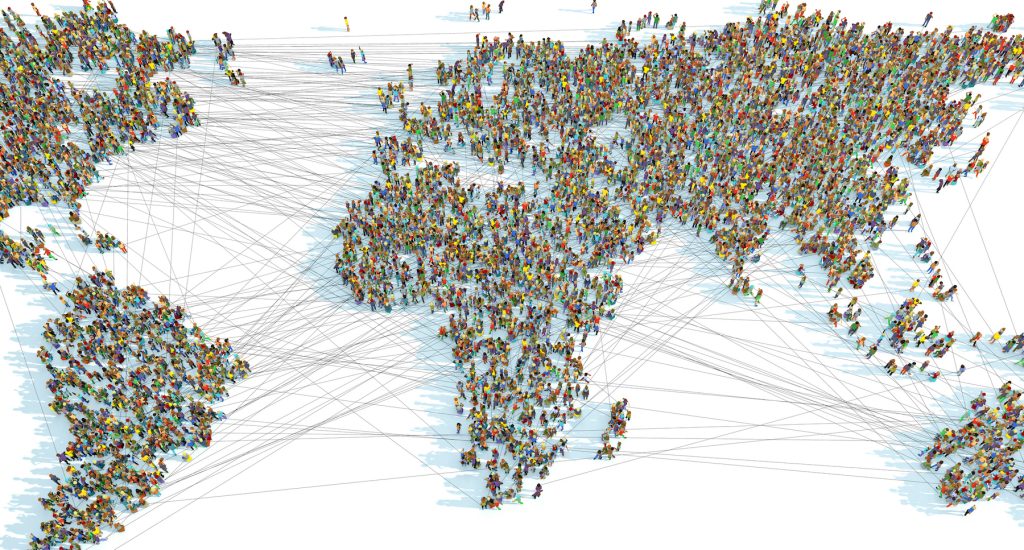
Multilingual content allows for a global marketplace of ideas and products.

Competition in the Global Marketplace

Moreover, in today’s global marketplace, businesses continually vie for the precious currency of consumer attention. If your competitors are serving up multilingual content while you remain tethered to a single linguistic group, you risk fading into obscurity, relinquishing your share of the market.

Personalisation in the Digital Age

As the curtain falls on the era of content creation democratisation, the spotlight shifts towards content consumption and personalisation. In the contemporary landscape, consumers enjoy unparalleled access to a cornucopia of content spanning countless platforms. This abundance underscores the heightened significance of personalisation and relevance. Bill Gates himself acknowledges the pivotal role of content tailored to individual preferences and needs. Hence, the luminance of multilingual content shines brighter than ever.

Supercharging Sales with Multilingual Content

     A. Speak the Language of Your Audience

Bill Gates foresaw the need for content localisation back in 1996. By conversing in the language of your target audience, you not only bridge divides but also nurture trust in potential customers. This approach enriches engagement, elevates the customer experience, and ultimately fuels sales. Take, for instance, Microsoft, which recognises the importance of tailoring its products and services to specific cultural contexts. The company has crafted localised versions of Windows and Office to offer interfaces and language support attuned to users across diverse regions.

     B. Expand Your Global Footprint

Multilingual content serves as the key unlocking new markets and expanding your customer base. Localising your marketing messages empowers you to communicate effectively with potential customers in their preferred language, cultivating a deeper sense of familiarity with your products or services.

     C. Enhance the Customer Experience

When customers find product information, user manuals, and customer support in their native tongue, they are more likely to make confident purchasing decisions. This positive experience fosters satisfaction and loyalty, ultimately propelling sales.

     D. Craft Culturally Relevant Narratives

Language intertwines intricately with culture. By infusing cultural nuances into your marketing and sales endeavours, you forge a profound connection with your target audience. This showcases your respect for customers’ culture and values, rendering your brand relatable and trustworthy. Microsoft’s marketing campaigns frequently exemplify a commitment to inclusivity and diversity, spotlighting the cultural context of individuals and experiences from a tapestry of communities.

Content’s Evolution in a Digital World

In today’s digital epoch, content reigns supreme. Bill Gates’ insights, as expressed in his 1996 essay, have evolved alongside rapid technological advances and a dynamic digital landscape. While the call for high-quality content persists, today’s perspective places a premium on the empowering nature of content and the imperative of personalisation. Additionally, Gates acknowledges the pivotal role of content creation as a revenue source. As our digital world continues its transformation, multilingual content emerges as an indispensable asset for businesses, ushering in audiences, nurturing relationships, and stoking the flames of sales in the modern age.

Take Action: Embrace Multilingual Content

Now that the spellbinding potential of multilingual content has been unveiled, it’s time for you to take action. Embrace the kaleidoscope of linguistic diversity, tailor your content to resonate with diverse hearts, and witness your sales soar. Come, join hands with London Translations, your trusted companion in the realm of translation and interpretation, as we embark on a journey to connect the world. Your international audience eagerly awaits this connection.

Growing Economies – Predictions and Language Opportunities

The economy is ever-changing. With COVID-19 causing recessions in some nations, Brexit potentially affecting the business landscape and trading and stocks conflicts arising, many are keeping an eye on up-and-coming economies. The world economy is projected to grow 5.5 percent in 2021 and 4.2 percent in 2022, but the current top economies are expected to change.

Dominating the language of a potential new market is key for business expansion. Today, we have a look at future emerging economies and countries with growth potential.

Future Largest Economies

PwC’s The World in 2050 report reveals that six of the seven largest economies in the world are projected to be emerging economies in 2050 led by China (1st), India (2nd), Indonesia (4th) and Brazil (5th). The US could fall from second to third place while the EU27’s share of world GDP could fall below 10%. Even smaller economies such as Vietnam, the Philippines and Nigeria will see huge leaps in their rankings, according to the report.

Other reports expect China to continue to grow, as well as Guyana, South Sudan, Egypt, Benin and Bangladesh to strongly emerge.

Additionally, we have seen Brexit force many businesses to move to the Netherlands, as Reuter reports. The Netherlands Foreign Investment Agency has seen 78 companies move to the country due to Brexit, as brands look to secure their European operations.

The economy is ever-changing, yes, but there are strong signs that give us a glimpse of what the future holds. All these emerging economies have a common denominator: foreign languages.

The Importance of Translations

We are here to help you reach greater audiences and expand to growing economies. At London Translations, we provide translation services worldwide, having a pool of over 9000 linguists who work in more than 140 languages, including those dominant in projected top economies.

Our translation services can be tailored to adapt to any of your needs. To tell us about your project and find out how London Translations can help you, get in touch for a consultation.

Website localisation best practices: 3 points to remember

If you’re looking to expand your brand’s reach across global markets, website translation is an essential step to take. However, when it comes to certain territories, it is often not enough to simply have the content on your website translated word-for-word. This is where website localisation goes a step beyond basic website translation services.
Localising your website ensures that your content resonates with your entire potential global audience. Beyond simply translating the words on the page, localisation adapts your website to the culture of your new audiences. Changing your site’s colour scheme, adapting your social media and SEO strategy, and even overhauling the design of your site itself can all make a positive impact on your success abroad. Here are three crucial points to remember when you ask an agency to localise your website.

Be mindful of small variations between your localised sites

If you’ve already had your website translated professionally, you might think your content is up to standard, internationally speaking. However, even if the message your brand is putting into the world can now be understood by multiple audiences, there are still some small but important refinements you will need to make.

Be sure each of your localised sites have the correct contact information, as well as making sure legal considerations (such as the terms and conditions page and cookies agreement) adhere to the requirements of each territory. Likewise, ensure that details on any of your site’s product or event listings, such as sizes, measurements, dates or currency, all conform to the standard units or formats in your target country.

Adapt the design and media content of your website

While the majority of languages will require little to no alterations to the design of your website, localisation to some territories might lead to some vital tweaks being made. According to IBM, translating paragraphs from English into other European languages requires around 30% more space on the page, so a localised website will need to accommodate this additional space in its design.

Images and videos will also need to be altered and optimised. Including subtitles on video content, or reworking text-based images into your target language is a given, and will again inform how your localised website will be designed. However, you should also ensure that the images and videos themselves are culturally sensitive to your target international audience.

Make your technical instructional imagery as easily-comprehensible as possible, and be sure to adapt any step-by-step graphics for any territories reading from right to left. You should also make sure that any gestures and scenarios in the photos on your site which may register as inoffensive to Western audiences (such as drinking alcohol) are altered or replaced in order to avoid upsetting users in other cultures.

Keep local SEO in mind

As with the text and layout of your pages, the overall structure of your site will need to be revised in order to adhere to localised customs in your target markets. Researching how your local competitors organise the navigation of their sites will give you a better idea of how companies in your sector structure their websites, particularly when it comes to organising products and services.

Beyond this, developing a local SEO strategy to these new markets is also essential, making sure that any link building campaigns target locally-relevant websites. As well as translating your onsite content, revising elements in the back end of your website, such as your title tags and meta descriptions, allows you to accommodate localised keywords, and set canonical tags on any pages which could be flagged up as duplicate content. Hosting these versions of sites at different local domains has also been recognised as a positive ranking factor, so investing in a .co.uk, .ru or .de website alongside your primary global domain will help your site’s visibility. You should also keep your Google My Business profiles updated with all information for any local offices you might have in these other territories.

Website localisation may seem daunting, but it can easily be informed by your market research and the collective knowledge of the staff in the territories to which you are expanding. Depending on the number of countries for which you will need to localise, the process will likely become easier the more frequently you do it, with only the cultural nuances of each country needing to give you pause. Regardless, by employing the advice above, your business is sure to see international success.

Why technology will broaden linguistic opportunities, not limit them

With the rapid rise of Google Translate and other online language tools, there has been much speculation about the wider effect this technology will have on the translation industry. Despite the development of machine learning and artificial intelligence leaving many translators fearing for their jobs, there is good reason to be optimistic about tech’s effect on the linguistic sector. In many ways, new technology has the potential to broaden linguistic opportunities, not limit them.

Imperfect machine translations will highlight the need for professionals

Machine translation may have grown in popularity for being far quicker and more convenient than the professional alternative, but with lists of ‘Google translate fails’ frequently cropping up online, it’s clear that users are far from convinced of its accuracy.

These widely publicised, imperfect translations have done nothing to boost faith in machine translation. In fact, they only serve to shine a light on just how far machine translation has to go before it can produce accurate results. Naturally, this will lead many to search for a superior quality of translation, which professional human translators can happily provide.

Complex materials will need more human translators

New technological developments from outside the area of machine translation will also increase the need for translators. The worldwide spread of internet connectivity has led to increased demand for software translation for tech businesses localising their products for international audiences.

Here at London Translations, we’ve handled software translation for everything from the original Tomb Raider video game to cutting edge point-of-sale applications in the present, working with programming environments from DOS to iOS.

Localising software has more to it than simply translating any written or spoken words. Related materials such as user and technical reference manuals also need translations, as do any symbols or images that have different meanings around the world.

Technology is changing language, opening up new translation jobs

The modern world is already home to at least one professional emoji translator. Though the job may sound superfluous, it is in fact an important part of the changing linguistic scene. With emojis, memes and internet slang becoming increasingly important to brands everywhere, translating these phenomena for local audiences is crucial to businesses success. Thanks to changing technology and the trends that follow suit, new, exciting and bizarre translation roles will open up for those with the right skills.

Humans will always be better at translating tone

No matter how complex machine learning algorithms become, AI translation tools will lack the perceptiveness of human translators, especially when it comes to tone and intent. Communication is about more than just words; human translators can tell if speakers are joking, being sarcastic, rude, pleading, scolding, all by listening to how words are said, not just which words are said.

Machine translations can bring people around the world closer together by bridging the language barrier for free. However, the professional and political connections these people make will no doubt require skilled human translation to ensure that high-stakes communication is conveyed accurately and without interruption.

Machine translation could lead to a ‘two-tier’ system

One of the most positive ways to look at the advent of machine translation is this: It will act as a gateway to more businesses using professional translation. Smaller and medium-sized businesses, who may not have considered expanding abroad in the pre-machine translation era, now have the opportunity to test the international waters with free translation tools. If they find that their Google Translated website is bringing in some traffic, they might then decide that foreign territories present serious opportunities, and thus seek out the ‘higher tier’ of translation. This presents a big change for the translation industry as a whole, but it’s a far more welcome scenario than the worrying prospect of mass redundancies.

Far from decrease the workload of professional translators, this two-tier system will bring in new customers who would never have needed, or known they needed, to use translation and localisation services in the first place. In this instance, and the others detailed above, machine translation will truly create more demand for skilled professional translators and localisation experts from all over the globe.